What? So What? Now What?
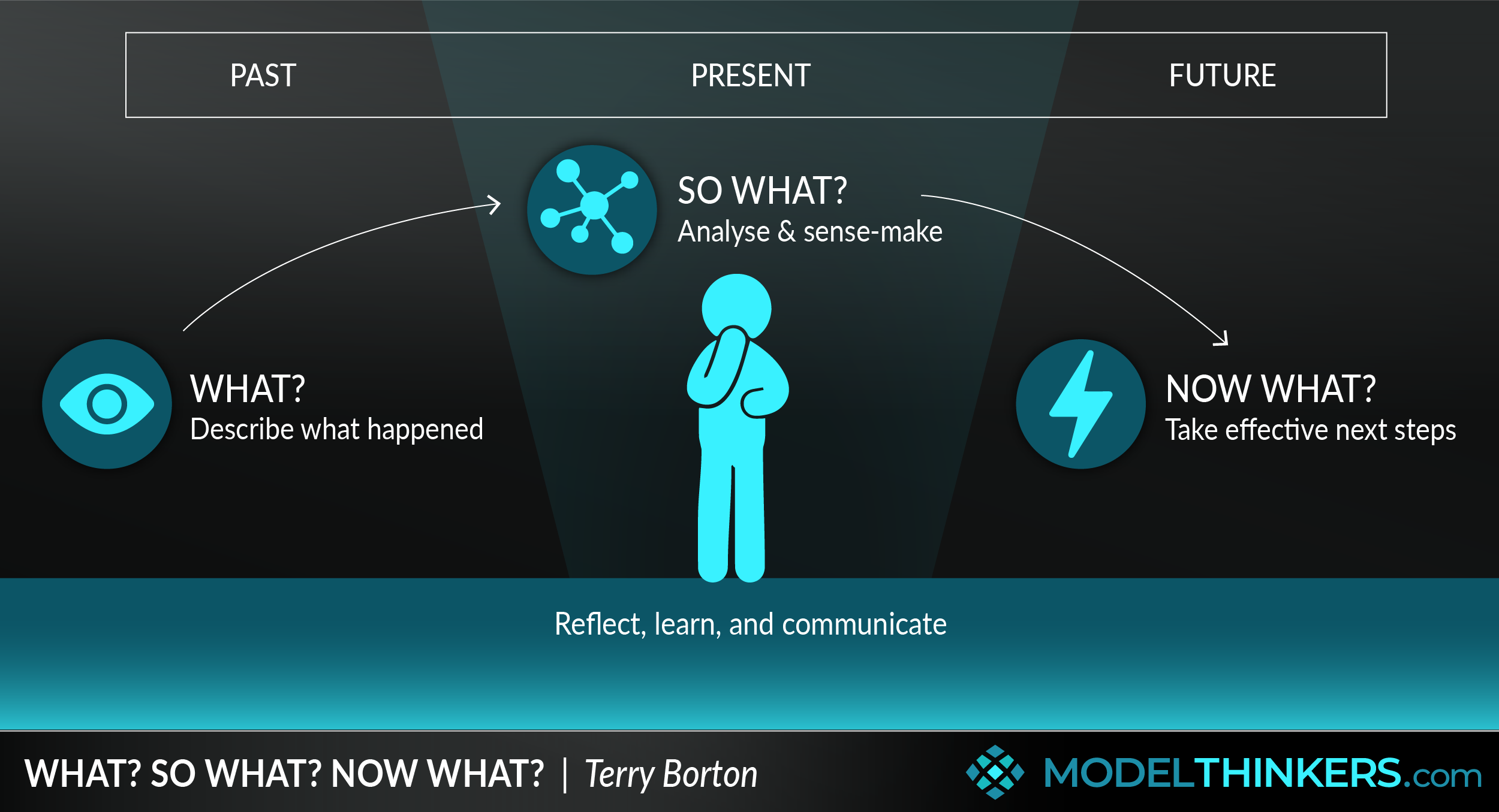
This model was created by Terry Borton as a group facilitation technique in the 1970s before it was popularised as a reflective tool for clinical healthcare practitioners in the 1980s. Since then, it remains a simple and effective reflective, learning, and communication technique.
The What? So What? Now What? approach involves asking ‘what’ happened by describing the facts of an event; ‘so what’ by analysing, sense-making, and drawing insights from the event; and ‘now what’ by applying your lessons for effective next steps.
REFLECTION BASICS.
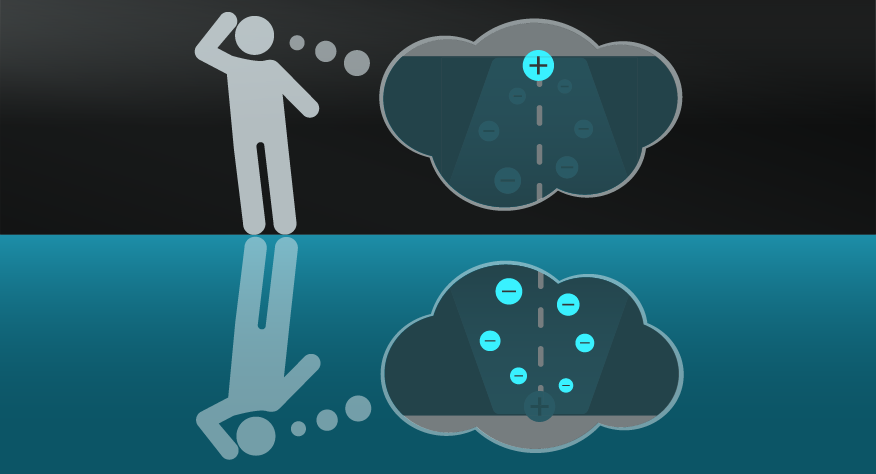
Educator John Dewey captured it best when he noted “We do not learn from experience... we learn from reflecting on experience.” Reflection involves thinking about our past experiences to identify lessons that will inform our future actions. A simple reflective practice has been shown to boost performance, for example, a research project with call centre workers showed that 15 minutes of daily reflection led to 23% performance improvement, similar results have been demonstrated in more complex work, especially in the health sector (see Origins and Resources for links).
The What? So What? Now What? method has proved to be a popular reflection choice because it’s simple to remember and apply. It can be used in group sessions, for project retrospectives, as part of training interventions, coaching and mentoring conversations, and even as a communication or storytelling framework to structure reports and presentations.
EXAMPLE QUESTIONS.
Let’s break down the three 'whats' and consider possible questions you might ask in each stage.
STAGE
FOCUS
POSSIBLE QUESTIONS
WHAT?
Past:
describe what happened
What was your experience?
What happened, focusing on the actual facts only?
What did you particularly notice?
What worked well and what didn’t?
Who else was involved?
What did you do?
What was the related data or information?
SO WHAT?
Present:
analyse and sense-make
How did you feel when it happened?
What might have been behind your response?
Was this event part of a broader pattern?
What caused this event?
Why might have other people acted the way they did?
What other insights or hypotheses might be drawn from the experience and data?
NOW WHAT
Future:
effective next steps
What lessons can you take forward in similar and other contexts?
How might you prevent negative outcomes or problems in a similar situation?
What would you do differently if a similar situation arose?
How might you better prepare and resource yourself for a similar situation?
How might you test out your understanding or hypotheses through tests or experiments?
LAUNCH YOUR REFLECTION HABIT.
After you read this summary, be sure and go back and read about Habit Loops. Embedding a habit of reflection will improve your effectiveness, learning, and productivity, so consider which cues you can use to trigger your reflection routine.
For example, you might initiate a 10m reflection routine when you have a coffee, when you turn off your computer, or even when you board the train to go to the office. The point is to incorporate these 'what' questions into your routine. Beyond personal application, you can also consider how to embed reflection into your team and collaborative work by scheduling retrospectives and project reflections using the same questions.
IN YOUR LATTICEWORK.
This approach will work best when you apply First Principles in the ‘What?’ section to challenge and let go of assumptions as you focus on the facts. Try digging deeper to understand the So What by applying the Five Whys and/or the Fishbone Diagram to dig into the root cause.
It's one of the methods you can use to explore Double Loop Learning, particularly if you use ‘So What?’ questions to challenge your existing mental models. It also has close links to other reflective and learning techniques including Black Box Thinking, the OODA Loop, and ultimately the Scientific Method.
Beyond reflection and learning, also consider using this approach as a simple storytelling and communication technique, complementing models such as the Hero’s Journey, the Rule of Three, Minto’s Pyramid and SCQA, and Aristotle’s Rhetoric. The approach also has links to Spotify’s DIBB Framework, which is the company's data-driven approach to communication and decision making.